

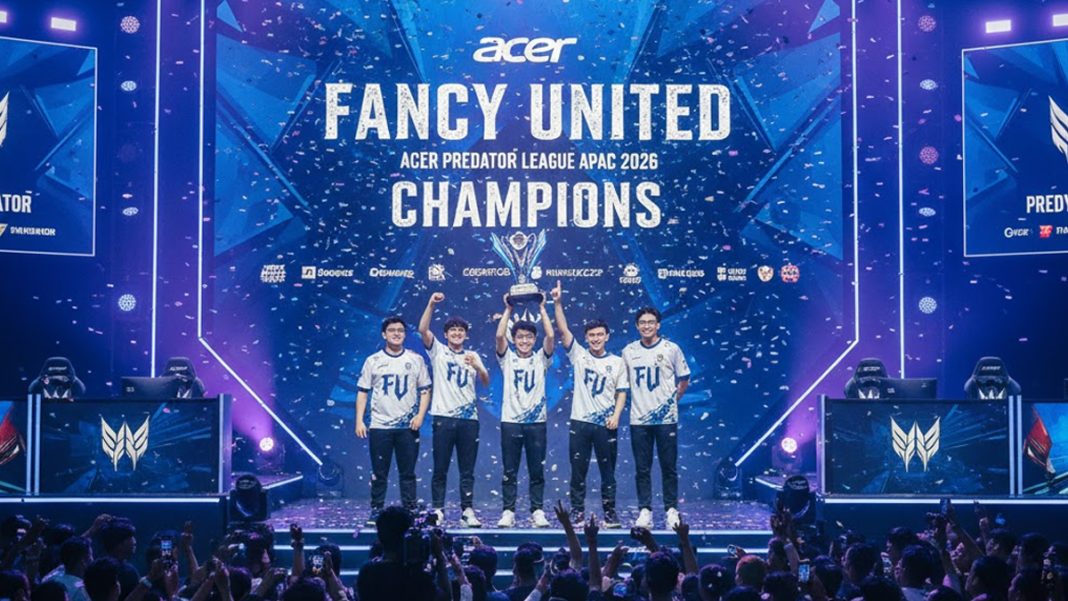
So Fancy United from Vietnam just took home the Valorant championship at Predator League APAC 2026. If you’re sitting there shocked right now, you really haven’t been paying attention to what’s been happening in Vietnamese esports lately.
This wasn’t luck. This wasn’t some Cinderella story. Vietnam’s been grinding away building real infrastructure for years, and this is just them collecting what they’ve earned. Honestly, this feels overdue more than surprising.
Predator League Was Intense Again
Acer’s Predator League APAC wrapped up recently and it was everything you’d want from a regional tournament. Packed venues, high-stakes matches, that specific energy when national pride’s on the line. They featured multiple games, brought in talented teams from all over Asia Pacific—basically the kind of event that reminds you why APAC esports is so fun to watch.
But the real story this year was Valorant, and Fancy United absolutely owned it.
Vietnam Didn’t Get Lucky Here
Here’s what people need to understand: Vietnam didn’t accidentally become good at esports. They’ve been deliberately building this—investing in player development, creating actual professional team structures with real discipline, growing fanbases that are as passionate as you’ll find anywhere in the region.
Fancy United winning isn’t some upset where the underdogs got hot at the right time. It’s proof that Vietnam’s moved from being happy just to compete internationally to actually being legitimate championship contenders. If you’ve been following APAC esports seriously, you watched this build over the past few years.
The foundation’s been getting stronger. New talent keeps popping up. The competitive scene keeps getting more professional. This championship is just the most obvious result of all that work finally paying off.
Valorant at This Level Isn’t What You Think
People who don’t follow tactical shooters sometimes think Valorant is just “click on heads really fast.” That completely misses the point of what makes competitive Valorant actually interesting.
Elite Valorant needs team coordination that’s almost telepathic. Tiny positioning mistakes cost you entire rounds. Your strategy has to constantly adapt based on what opponents are doing and how much money everyone has. You need mental toughness when you’re down 8-4 and need to win eight straight rounds just to survive.
Think of it like chess but every piece is making its own split-second decisions while somehow staying perfectly coordinated—and everything’s happening at insane speed. Sure, you need good aim, but the strategic depth is basically endless.
Fancy United showed they understand all of this throughout the tournament. They played confident but not cocky. Stayed calm when things got tense. Executed complicated strategies with the kind of precision you only get from practicing together for thousands of hours.
When you watch top teams play, you can immediately tell the difference between teams that are just good and teams that are actually great. Fancy United was consistently great—not just competent, but actually dominant.
Why Regional Tournaments Like This Matter
Predator League does something important that bigger international events sometimes skip: it actually gives regional teams real opportunities instead of just featuring the same big-name organizations everyone already knows.
That creates legitimate chances for teams from developing markets to prove they belong. This is crucial for the health of esports across Asia Pacific. You need tournaments where emerging regions can actually compete and win—not just show up to fill out brackets before getting eliminated by favorites.
Fancy United’s championship is a perfect example of why this works. Regional events create new champions, inspire younger players, prove you don’t have to be from traditional esports countries to succeed at the highest level.
Vietnam’s now part of conversations about APAC’s best teams. That shift in perception affects everything else—sponsorship money, attracting talent, fan engagement, infrastructure investment. Success breeds more success.
This Matters Way Beyond Just Winning a Tournament
For Vietnamese esports overall, this championship means validation, momentum, and inspiration all at once. Young gamers in Vietnam now have concrete proof that teams from their country can win major international tournaments. That’s way more motivating than just hearing “maybe someday you could compete.”
More talented kids will see esports as a real career option. The training culture gets more serious. The competitive drive intensifies. Investment in infrastructure speeds up. The whole ecosystem enters this positive cycle where each win makes the next one more likely.
For Fancy United themselves, doors that were closed before are now opening—better sponsorship deals, international recognition, invitations to bigger tournaments, partnerships with major brands. Winning championships at this level genuinely changes careers for teams and players.
These breakthrough moments are how professional careers actually get built.
More Than Just the Matches
Predator League wasn’t only about the Valorant competition. They had multiple games, created this full festival vibe—top-tier gaming setups, chances for fans to meet players, brand activations, live entertainment, the whole package.
That’s important for growth beyond just competitive results. When tournaments feel like actual events instead of just match schedules, they attract bigger audiences, create better fan experiences, build excitement around competitive gaming as a culture and lifestyle—not just as a sport.
Acer’s obviously using this to showcase their Predator gaming hardware—monitors, laptops, peripherals, all that stuff. That’s totally expected and fine. At least they’re doing it while actually supporting real competition and giving teams across APAC meaningful opportunities.
You can balance commercial interests with competitive integrity when you do it thoughtfully.
APAC Valorant Is Brutal Right Now
Fancy United’s win really highlights how competitive Valorant’s gotten across Asia Pacific. South Korea, Japan, Thailand, Indonesia, Philippines, Singapore, Vietnam—they’re all producing strong teams that keep pushing each other harder.
This kind of dense competition accelerates development faster than regions where one or two teams just dominate everything. When multiple countries are producing legitimate championship threats, nobody can relax. Teams either evolve quickly or they get left behind.
That raises the overall level of play dramatically, makes the region way more interesting to follow, and attracts more investment and international attention.
Vietnam winning in this incredibly tough environment says a lot about where their scene is right now. They’re not just participating—they’re beating serious competition consistently.
What This Means Globally for Vietnam
Internationally, this really strengthens where Vietnam stands in global esports discussions. Organizations and sponsors looking at APAC markets pay close attention to who wins tournaments. Fancy United’s victory attracts investment money, partnership opportunities, international recognition—helping both the team and the Vietnamese esports industry as a whole.
Esports success supports way more than just the players. Content creators covering Vietnamese teams can build actual careers. Coaches and analysts develop their professional reputations. Tournament organizers get experience and credibility. Fans celebrating national wins create something like genuine national pride.
That cultural legitimacy really matters. Esports is still fighting for mainstream acceptance in a lot of places. Big championship wins shift how people think about it, proving competitive gaming deserves to be taken seriously as both a sport and an industry.
Where Things Go From Here
Vietnam’s esports development over the past few years has been genuinely impressive to watch. They’ve built systematically instead of just hoping individual talented players would carry everything. That disciplined approach is clearly working now.
This won’t be Fancy United’s only major win. Vietnamese teams are set up to keep competing successfully at regional and maybe even international levels consistently. They’ve got the infrastructure, the talent pipelines, the competitive culture, the fan support—all the stuff you need for long-term success.
For APAC esports in general, Vietnam getting strong like this is healthy for everyone. Regional competition gets richer and more interesting when multiple countries can legitimately win major tournaments. Vietnam joining those elite conversations alongside traditional powerhouses makes the whole scene better.
Final Thoughts
Fancy United from Vietnam completely dominated Valorant at Predator League APAC 2026. They showed world-class talent, disciplined play, strategic mastery at the highest levels of APAC competition.
This win means more than just the trophy. It validates how Vietnam’s been building their competitive infrastructure, it inspires younger players coming up, it proves their investment is actually working.
APAC esports keeps evolving incredibly fast. Vietnam’s now firmly established as a region that consistently produces championship-level teams. Fancy United’s Predator League win isn’t the end of anything—it’s confirmation they’ve arrived and a foundation for keeping this going.
If you’re not already watching Vietnamese teams in APAC Valorant, you should start. They’ve proven they belong in every conversation about elite regional competition. Based on how things are trending, they’re nowhere close to being done winning.
The power balance in the region is shifting. Vietnam’s here now. Get used to seeing them on championship stages—this is just the start.