

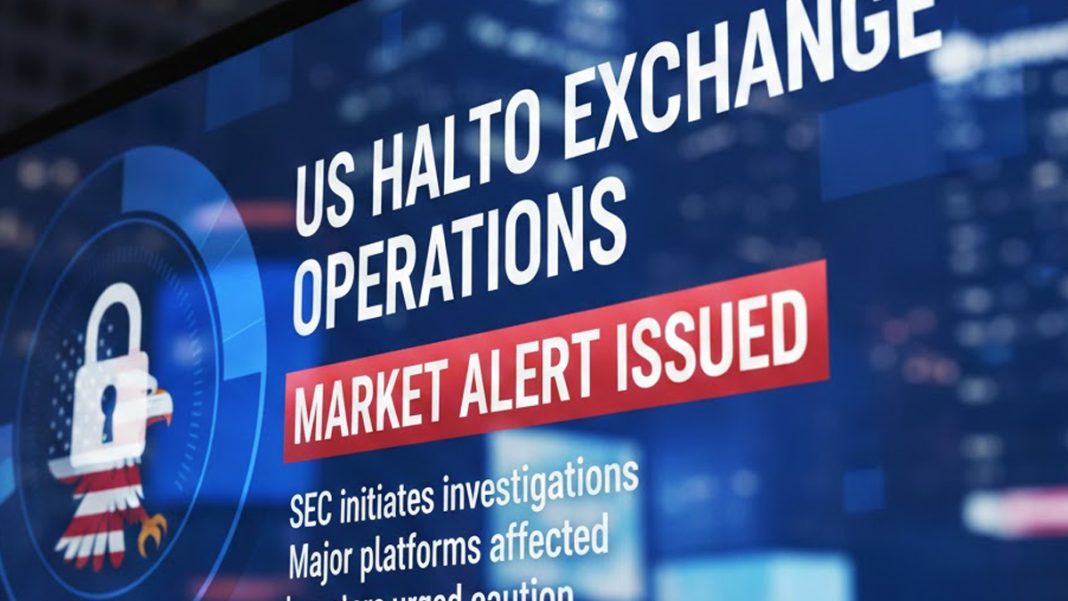
So, it looks like US officials shut down a crypto exchange and sent out a market alert. Now everyone is on edge again. Traders are on edge, investors are second-guessing their choices, and crypto companies are probably wondering if they’re next. This kind of enforcement action doesn’t happen in a vacuum. It affects the whole market and reminds everyone that there is still regulatory risk.
Here’s why exchange shutdowns are more important than you might think. Exchanges are not just a minor part of crypto; they are the very foundation of the whole trading system. People buy, sell, store, and move their digital assets there. When one gets shut down, even for a short time, it messes up liquidity, lowers confidence, and can cause prices to swing wildly across many coins.
We don’t always know right away why certain exchanges are shut down, but it’s usually because they aren’t following the rules, people think they’re doing something shady, they’re worried about protecting consumers, or they don’t have the right licenses to do business. It’s true that US agencies have been cracking down more lately, and can you really blame them? Regulators feel like they have to move quickly when they think people’s money might be at risk, especially after all the scandals, collapses, hacks, and fraud we’ve seen in the last few years.
The market alert part is very interesting. When officials send out one of these alerts, they’re basically saying, “Hey, be careful out there.” Most of the time, these alerts point out possible risks, scams, shady trading patterns, or platforms that aren’t safe. The problem is that they can make people panic, especially small investors who are worried about losing access to their money or seeing the market crash.
When these enforcement actions happen is very important. On a good day, crypto is already very unstable. When bad news about regulations comes out, price swings get even bigger. When traders feel the heat from regulators, they usually react defensively by putting their money in stablecoins, getting out of positions, or sitting on the sidelines. That stops the market from working and makes it even harder to find prices.
Then there’s the real-life nightmare for everyday users. Exchanges are important for a lot of people because they let them trade every day, store things for a long time, and quickly switch between crypto and cash. Do operations get stuck? People can’t take money out of their accounts, access is limited, and account balances are now in doubt. Even if the money is technically safe, the fear of losing control over your assets causes huge trust problems that affect the whole industry.
This whole thing really shows how the US is still struggling to balance crypto innovation with
government oversight. Crypto companies are always saying that America needs clearer laws instead of this enforcement-first approach. A lot of businesses say, and they have a point, that all this uncertainty stops new ideas from coming up and makes startups move to places that are more friendly to crypto, like some European countries, the Middle East, or parts of Asia. At the same time, regulators say that strict enforcement is needed to stop fraud, protect consumers, and keep financial markets from becoming like the Wild West.
And we can’t forget about how traditional finance fits into this. Banks and other well-known financial institutions have pushed hard for stricter rules on cryptocurrencies, saying they are worried about money laundering, fraud, and market manipulation. But crypto supporters say—and they’re probably not completely wrong—that banks don’t like crypto because blockchain-based finance threatens their control over payments, lending, and those sweet transaction fees they’ve been collecting forever. So regulation becomes a battleground where real safety concerns and good old-fashioned market competition fight it out.
This is another reminder for investors that the prices of cryptocurrencies don’t just go up when new technology comes out or more people start using it. Policy choices are very important. When fear and uncertainty hit the market, even good projects can get hurt. That’s why experienced players put a lot of effort into managing risk. They have a wide range of investments, keep their money safe, and stay away from shady platforms that could go out of business next week.
For a short time? Expect more volatility, especially if this stopped exchange was big and used by a lot of people. The amount of trading will move to other platforms. Prices will change quickly in response to any news from the government or changes to the rules. People are watching the next few days to see if this shutdown is temporary, if operations can start up again, or if we’re seeing the start of a bigger crackdown.
In the long run, though, these things might actually make the industry more open and compliant. Exchanges and crypto companies could help the market grow up and become more legitimate by using better security, clearer reporting, and higher operational standards. But until rules become more stable and predictable, crypto is likely to keep getting hit with these sudden enforcement shocks.
What bothers me about situations like this is that they aren’t clear. Did this conversation really hurt someone? Was it running in a careless way? Or is this regulatory overreach aimed at a business that was trying to follow the rules but couldn’t figure out how to do so because they were so confusing? We don’t often get enough information up front to make a good judgment, which just makes things more uncertain.
And here’s the cynical part: sometimes these actions to enforce the law seem less about protecting consumers and more about sending messages. Regulators want crypto companies to know that they are keeping an eye on them. They want exchanges to know that doing business in the US is closely watched. There is some debate about whether that approach really works or just moves innovation to other countries.
The message from US officials is very clear right now: they’re keeping a close eye on things, they’re ready to act quickly, and crypto businesses should get ready for stricter rules in the future. It probably depends on how you feel about crypto and the government’s role in markets whether you think that is necessary for consumer protection or too much government control.
In either case, this is probably a good time to look over your risk exposure if you have crypto on exchanges. Think about moving a lot of your assets to wallets you own. If you need access to an exchange, use more than one platform. Also, don’t keep everything in one place that could
suddenly stop working.
The main question this raises is whether crypto can really thrive in the US with the way things are now, or are we just seeing the industry slowly move to places where the rules are better? We’ll see what happens, but things like this don’t help America’s case for becoming a crypto hub.
Welcome to another day in the world of cryptocurrency, where one of the biggest risks is still not knowing what the rules are. Get ready; this probably won’t be the last time an exchange goes down this year.