

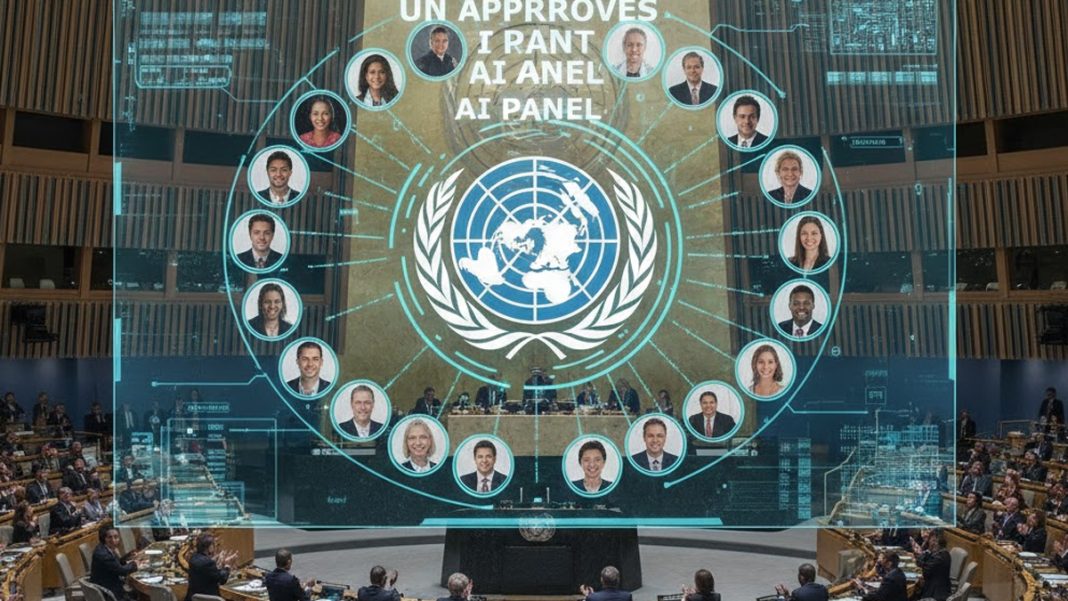
The United Nations General Assembly took a significant step toward multilateral AI governance on February 13, 2026, approving the creation of a 40-member Independent International Scientific Panel on Artificial Intelligence by a vote of 117 to 2. The United States and Paraguay were the only countries to vote against. Tunisia and Ukraine abstained.
The lopsided vote sends a clear geopolitical signal: the overwhelming majority of the world’s nations want some form of coordinated international framework for assessing AI’s impacts, even if the world’s leading AI superpower doesn’t.
UN Secretary-General António Guterres called the vote a “foundational step” toward evidence-based multilateral cooperation, framing the panel as a mechanism to ensure all nations—regardless of their technological capacity—can engage meaningfully with AI governance questions as the technology accelerates.
What the Panel Will Actually Do
The 40 experts were selected from a pool of more than 2,600 candidates through a review process run by the ITU and UNESCO. The panel is predominantly composed of AI scientists, supplemented by interdisciplinary voices. Nobel Peace Prize laureate and journalist Maria Ressa is among the members, reflecting an intention to incorporate perspectives on AI’s social and democratic impacts alongside purely technical assessment.
Panel members serve three-year terms. Their mandate covers assessing AI’s opportunities, risks, and real-world transformations across economies and societies globally. The first deliverable is an annual report due by July’s Global Dialogue on AI Governance—an aggressive timeline that signals the panel is meant to produce actionable analysis quickly rather than spend years on process.
Spain has offered to host the panel’s first in-person meeting. Operating procedures require public transparency on how evidence gets synthesized and how dissenting views are handled—a transparency requirement that directly addresses concerns about the process being dominated by any particular bloc’s perspective.
Why the U.S. Said No
The Trump administration’s opposition was pointed and principled from its perspective. U.S. Mission counselor Lauren Lovelace denounced the panel as beyond UN competence, rejecting what she characterized as international bodies “influenced by authoritarian regimes” dictating AI governance to democratic nations.
The administration’s stated preference is for coordination among “like-minded nations” who share values around innovation and democratic governance. The objection to the selection process centered on concerns that it favored Russia and China alongside European allies in ways the U.S. found non-transparent.
This position is consistent with the broader Trump administration approach to multilateral institutions—skepticism toward bodies where adversaries have equal standing, preference for coalitions of aligned democracies, and resistance to frameworks that could constrain American technological leadership through international consensus processes.
The tension is real and not easily dismissed. A governance panel that includes nations with authoritarian AI deployment practices—social scoring systems, mass surveillance, political censorship—alongside democratic nations does create genuine questions about whose values and risk frameworks will shape the assessments. The U.S. concern that “international consensus” could legitimize approaches antithetical to democratic principles isn’t frivolous.
How the Rest of the World Responded
The Group of 77 plus China celebrated the vote as enabling comprehensive frameworks that guarantee developing country inclusion. Spain and Costa Rica, who co-facilitated the resolution, framed it as a necessary counterweight to AI development concentrated in a handful of wealthy nations.
China’s response was notably constructive in tone, urging the panel to prioritize capacity-building that reflects diverse regional needs—a framing that positions China as a champion of Global South inclusion while also serving its interest in shaping governance frameworks that don’t simply reflect U.S. and European regulatory preferences.
Iran’s call to amplify Global South voices for “impartial guidance” reflects a broader pattern: nations that feel excluded from the primary nodes of AI development see multilateral UN bodies as their most viable path to influence over how the technology gets governed globally.
El Salvador and Estonia, serving as co-chairs of the AI Dialogue, represent an interesting pairing—a small Central American nation and a small European one, both emphasizing that AI governance shouldn’t be exclusively determined by the largest powers.
The Timing and Strategic Context
The panel’s approval lands in the middle of a week dense with AI governance activity. The India AI Impact Summit running February 16-20 in New Delhi is hosting Macron, Lula, Gates, Hassabis, and Amodei for exactly the kind of governance discussions the UN panel is meant to inform with scientific evidence. Modi’s positioning of India as a neutral convenor between U.S. and Chinese AI approaches aligns naturally with a multilateral scientific assessment body.
The CSIS has noted the contrasting multilateral leadership visions between the U.S. and China on AI governance. Washington favors coalitions of democracies with shared values. Beijing favors UN-centered multilateralism where it has a guaranteed seat and veto-resistant influence through coalition building with the Global South. The 117-2 vote outcome reflects which approach currently commands more international support—though support in UN votes doesn’t always translate to influence over actual AI development trajectories.
The panel’s first report timeline aligns with the AI for Good Summit 2026, creating a natural venue for presenting initial assessments to a global audience that includes both technical and policy communities.
What the Panel Can and Can’t Do
It’s worth being clear about the panel’s actual powers. This is a scientific assessment body, not a regulatory authority. It cannot impose rules, set standards, or compel any nation or company to behave differently. Its influence, if it develops any, will come through the credibility of its analysis and its ability to inform national and regional regulatory decisions.
That limitation is also part of what makes it non-threatening to national sovereignty—and part of why 117 nations were comfortable voting for it. A body that assesses and reports is categorically different from one that governs and enforces.
The IPCC analogy is instructive. The Intergovernmental Panel on Climate Change doesn’t set emissions standards or enforce climate agreements. But its scientific assessments have shaped international negotiations, national policies, and public understanding of climate risks over decades. A credible, consistently rigorous AI panel could play a similar role—not replacing national governance but informing it with shared scientific grounding.
Whether this panel achieves that kind of credibility depends on execution. The selection process’s legitimacy, the quality and independence of the analysis, the transparency of dissent management, and the ability to maintain scientific rigor despite intense geopolitical pressures on its conclusions will all determine whether its reports become reference points or political documents.
The Bigger Picture
The 117-2 vote is a meaningful data point about where global governance sentiment sits. The vast majority of nations—including most U.S. allies—concluded that the benefits of a multilateral scientific assessment body outweigh the risks of participating in a forum that includes adversarial states.
That judgment reflects a calculation many countries are making: in a world where AI’s impacts will be global regardless of where development is concentrated, having a credible international body assessing those impacts is better than having no shared framework at all. The alternative to imperfect multilateral governance isn’t perfect bilateral governance among like-minded nations—it’s fragmented national responses to challenges that don’t respect borders.
The U.S. position leaves it outside a body that 117 nations have decided matters. Whether that’s principled leadership or costly isolation will depend on whether the panel produces work that proves genuinely valuable—and whether American absence diminishes or strengthens the panel’s independence.
Guterres’ call to “shape AI together” is now being tested against superpower rivalry in real time. The panel exists. Its first report is due in July. The question of whether scientific multilateralism can hold together under that pressure is one of 2026’s more consequential ongoing experiments.