


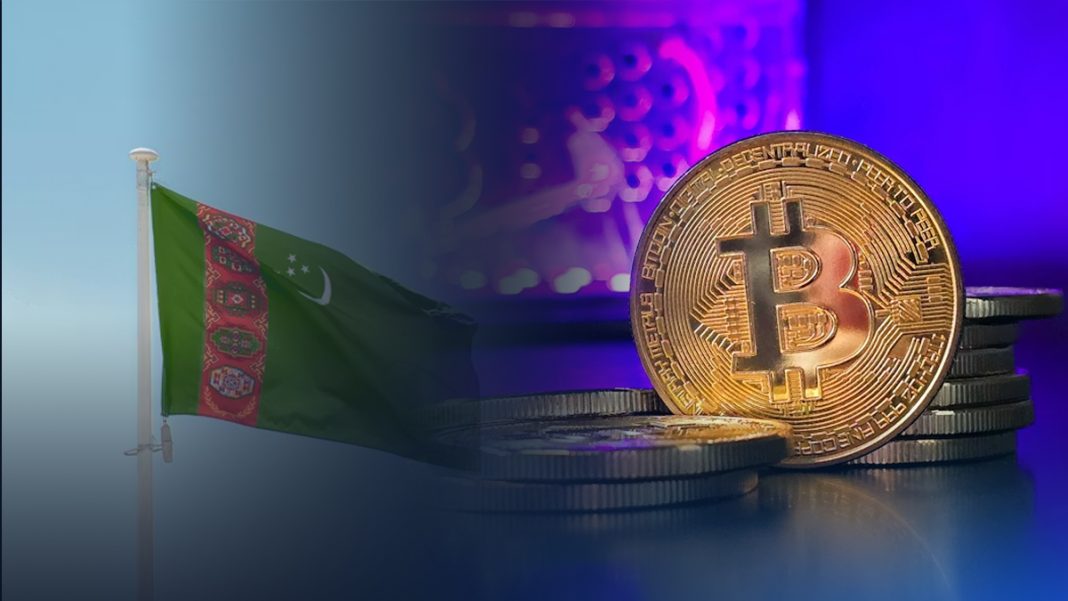
Turkmenistan has made a big adjustment to its economic strategy by officially allowing cryptocurrency mining and digital asset exchanges. This is an uncommon and significant change in policy for a country known for having rigorous financial rules. The action demonstrates that state officials are beginning to understand that digital assets and businesses built on blockchain could help the economy become more diverse and less dependent on natural gas earnings in the long run.
Turkmenistan’s economy has been mainly focused on exporting energy, notably natural gas, for a long period. This has given the country a steady stream of money, but it has also rendered it vulnerable to swings in global pricing, political pressures, and energy use. Legalizing crypto mining and exchanges is an attempt to find new ways to make money that use current strengths, such cheap and plentiful electricity.
This strategy is great for cryptocurrency mining, which uses a lot of electricity and computer power. Turkmenistan makes more electricity than it needs at home, and most of it comes from gas-burning power plants. It was hard to make money out of additional energy before now. The government wants to turn extra power into digital value by letting licensed mining operations work legally. This is like exporting energy as cryptographic computation.
The new rules say that bitcoins are digital assets and not legal currency. This difference is essential because it lets the state have control over monetary policy while still allowing people to trade in global crypto exchanges. Mining operations will need licenses, pay taxes, and pay energy tariffs. This will make sure that the state keeps an eye on things and gets a share of the economic benefits.
It is also very important that crypto exchanges are legal. In the past, people who wanted to buy digital assets generally used unofficial methods or overseas platforms that were in a legal gray area. Now that licensed exchanges are allowed, trade can be officially watched over. This lets the government enforce rules like checking people’s identities and keeping an eye on transactions, and it also brings in tax money from trade.
Officials have made it clear that the adjustments are aimed to bring in long-term, managed investment instead of short-term, risky investment. The government aims to avoid the instability and volatility that have hurt unregulated crypto markets in other countries by being explicit about the restrictions from the outset. The method shows a careful opening—accepting new ideas while still keeping an eye on the government.
International analysts regard this initiative as part of a larger trend among developing or resource-rich economies that want to join the digital economy. Countries who have more energy than they need or can’t get to regular financial markets as easily have been using crypto mining more and more to diversify their economies. By entering this arena, Turkmenistan joins a small but growing group of countries that are trying out state-guided crypto adoption.
But there is some disagreement about the change. Some people doubt that the benefits of making cryptocurrencies legal would be spread out evenly, or that they will only go to state-linked businesses and big investors. It will be important for licensing and regulation to be clear in order to find out if the sector can really support private business and job creation.
There have also been worries about the environment. Authorities say that mining will mostly use existing excess capacity, but rising demand could lead to more fossil fuel use. Some people in charge have intimated that renewable energy might be used in mining operations in the future, but there are no specific plans yet. The impact on the environment of more mining will probably continue to be a topic of contention in both the US and other countries.
From a technological point of view, the changes could lead to more demand for digital skills and infrastructure. To work at a mining facility or exchange, you need to know a lot about cybersecurity, data management, and software engineering. Over time, this might help create a local tech economy that goes beyond only bitcoin and into other digital services as well.
Investors have been careful but cautious in their responses. For substantial investment to happen, there have to be clear rules. The new legislative framework gets rid of a big problem. If it is done consistently and openly, it may bring in mining companies and fintech companies from the region that need dependable energy sources and clear standards.
The broader effects go beyond only economics. Turkmenistan’s officials are willing to gently become involved with global technological trends by making crypto activity legal. Even though the government is still a long way from having an open financial system, this action shows that they understand that digital assets are here to stay in the world of finance.
There are still big risks. Crypto markets are quite unstable, and the money made from mining can alter a lot as network difficulty, token prices, and rules in other countries change. A quick drop could make the predicted economic advantages less likely. A lot will depend on how well the government can adapt to changes in the sector.
The worldwide crypto community will be watching intently as Turkmenistan starts to make these changes. The country’s experience with legalizing mining and trading is a strategic way to leverage its energy riches into digital opportunities. How well it is run, how well it is governed, and how well it can mix innovation with control will determine whether it becomes a long-term part of economic diversification or just a short-term experiment.
It’s apparent that Turkmenistan’s way of thinking has changed. It has made a determined move toward changing its role in the digital economy by allowing crypto mining and exchanges. This could have a big impact on its finances in the years to come.