

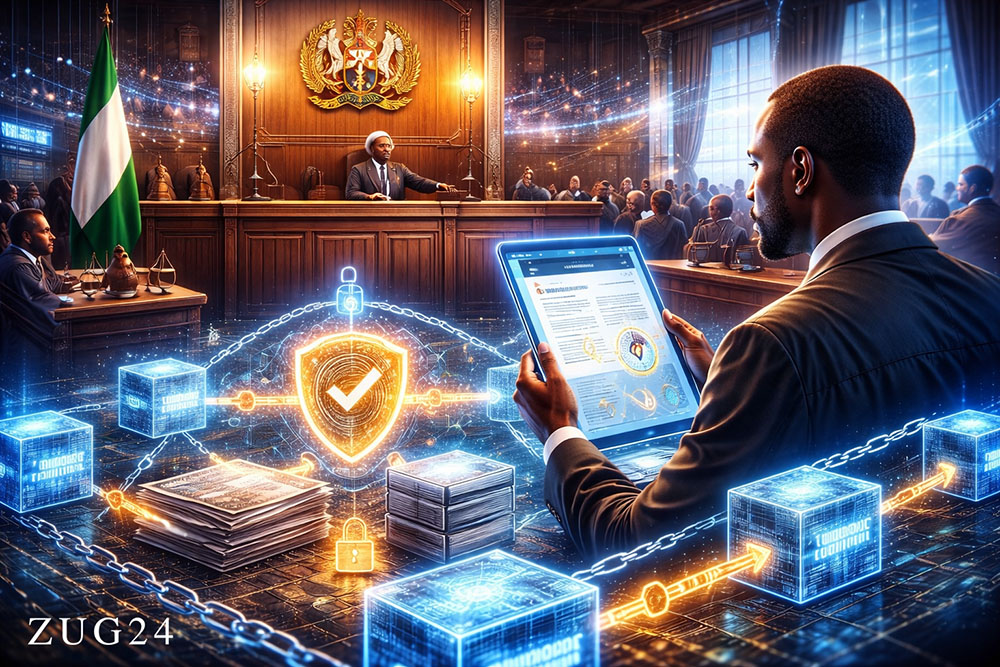
In Nigerian courtrooms, the “Original Document” has historically served as the primary evidence of authenticity. However, as Nigeria’s legal system prepares for the 2026 digital transition, blockchain technology has emerged as a strong contender for verifying document integrity.
For many years, Nigerian lawyers faced the “Admissibility Gap” a challenge caused by skepticism toward digital evidence that could be manipulated, deleted, or backdated. As the world moved online, Nigeria remained cautioous but a quiet revolution is underway. This shift is turning basic computer records into reliable “Digital Witnesses.”
Legal Foundations: Section 84 and More
The basis for digital evidence in Nigeria comes from Section 84 of the Evidence Act (2011), which states that proof of a document’s integrity depends on demonstrating the system’s reliability. Traditionally, this meant complex affidavits and expert reports.
Now, from 2023 to 2026, new judicial guidelines recognize “Functional Equivalence,” where a blockchain-certified hash – a unique digital signature – serves as proof of authenticity. When a document is registered on a decentralized ledger, it creates a secure, unchangeable record that meets the strict requirements of Section 84 regarding data integrity and proper use.
Beyond Court: Protecting Nigeria’s Creative Industries
In Lagos and Abuja the importance of this technology goes beyond legal proceedings. Nigeria’s fast-growing tech and entertainment sectors are losing billions to intellectual property theft. Traditional trademarking processes are slow; blockchain provides a quick “Provisional Shield,” allowing creators to establish a trusted “Date of Creation” instantly, recognized worldwide.
LutinX: Building the New Legal Infrastructure
Despite the benefits, many Nigerian firms hesitated due to complexity and cost. LutinX, the international platform for Digital Data Certification, offers a practical solution.
It tailors blockchain technology for Nigerian legal professionals – not as a cryptocurrency platform, but as a comprehensive Legal Suite. This suite allows instant evidence timestamping with L.Stamp and trademark protection through CZone.
With its Blockchain-certified Digital Archive (The Booklet®), LutinX gives Nigerian lawyers a “Certificate of Authenticity” linked cryptographically to their documents. It automates compliance with the Evidence Act for just $50 annually, making legal tech accessible across Nigeria.
Final Thoughts
As Nigeria moves towards full legal automation, law firms must decide not if but when to adopt blockchain. With legal frameworks supporting cryptographic proof and solutions like LutinX, the “Digital Witness” is now ready to testify.