

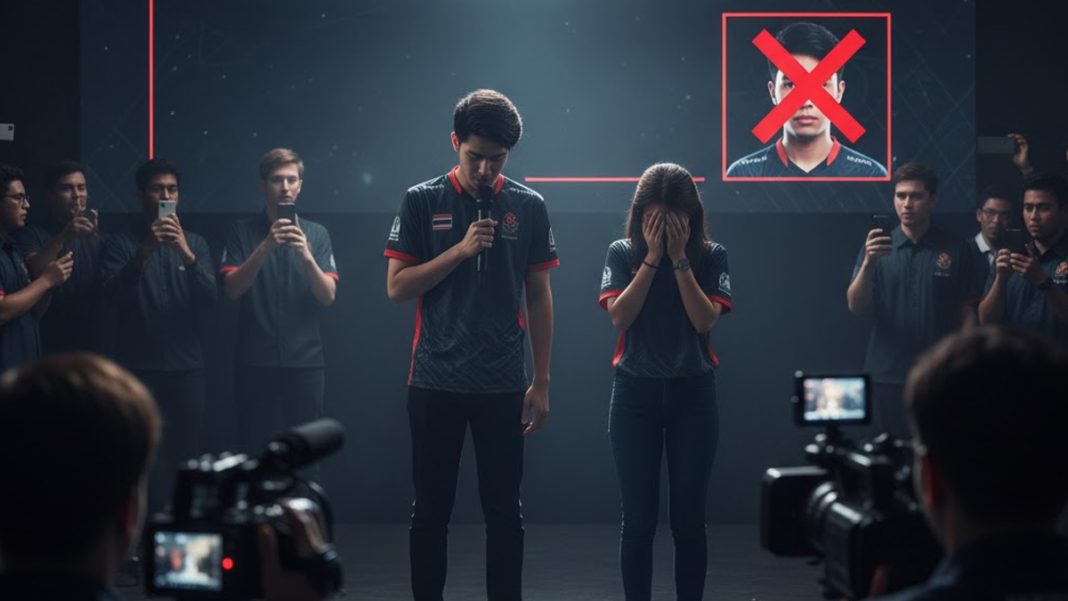
A huge scandal shook up Southeast Asian esports when a Thai player admitted to playing in a SEA Games-linked tournament under his girlfriend’s name. The cheating scandal has everyone talking about honesty, ID checks, and whether regional esports can compete with the big leagues while also trying to play real sports.
What Happened
The girlfriend was disqualified early, but the reasons are unclear. Instead of giving up, her boyfriend is said to have logged into her account, taken her credits, and kept the team going. Matches kept going until red flags showed up: The way you play changed—aim patterns were off, decisions were made too quickly, and even the voice and behavior didn’t match. Community members and organizations found it, which led to a review. When asked, he said, “Tried to save our run.”
Why This Hurts So Much
SEA Games esports isn’t just for fun LANs anymore. Representatives from Thailand, the Philippines, and Indonesia fight for medals, national pride, and the world’s attention. In multi-sport events, cheating can hurt your reputation like doping in the Olympics. Fans think esports is a real sport, but this is a slap in the face.
Tournament Hits Back
Organizations moved quickly: the whole team was disqualified, and individual bans were on the way. They said, “Clear violation of integrity.” Esports = the foundation of fair play. Impersonation destroys trust, making it hard for honest players to get ahead. Expect longer bans; this has happened before.
Identity verification is the biggest problem in esports.
Sports that are traditional? Physical gate—can’t fake a 6’5″ basketball player. Esports? Account-based events with optional cameras are great for tricks. No face recognition, weak passwords, or shared logins? Very weak AF. This shows where there are gaps: digital IDs must be as strict as Olympic-level ones as the stakes get higher.
Community Split—But Mostly Angry
Fans are setting it on fire online: “Cheating kills cred,” “SEA esports can’t hack multi-sport,” “Ban lifetime.” “Pressure cooker, team desperation” is a phrase that shows sympathy. Agreement? Intent doesn’t matter; rules are absolute. Relationships also make ethics less clear; lines that are too personal can be dangerous.
Regional Governance Under Attack
As SEA esports grows (with PH MLBB being the best, Thai PUBG being the best, and Indo Valorant rising), organizations are under Olympic scrutiny. Need:
Biometric logins before the match
Verification of voice and face in real time
Monitoring AI behavior (aim signatures, keypress heatmaps)
Strictly revealing relationships
Instant DQ rules for suspicion
Multi-sport integration needs it—lax = loss of legitimacy.
Lessons for Couples and Professionals
Couples who compete? Fuel for nightmares. Shared living makes it easy to get to your account. “Helping” quickly turns into fraud. Pros need strict rules, like separate logins, no coaching during a match, and filing relationship complaints like F1.
The Big Picture: Growing Pains in Esports
This story of warning comes at a time when SEA esports is booming. MLBB M7s fill stadiums, PUBG nations draw millions, and Valorant VCT SEA goes pro. Multi-sport cred is important because things like this could get a “not serious” label. Organizations should run like the IOC, not like Steam sales.
What Comes Next
The player will be banned for at least one to two years, and possibly for life from the SEA Games.
Team restructuring and loss of sponsors are likely.
Changes to regional verification standards
Policies about relationships in all tournaments
Rebuilding trust in the community is a hard road.
Is there a silver lining?
Shows cracks early on. Fix now stops disasters at the Olympic level. It’s normal for SEA esports to have growing pains; boxing had fixed fights and cycling had doping scandals. Now that you’ve cleaned your house, your ecosystem will be more mature later.
Final Decision
Don’t cross the line of honesty, says SEA legend Confession. Esports players are like national representatives under a microscope. Credibility is everything; if you lose it, it will take years to get it back.
As mobile and PC esports try to get into the Olympics, expect strict rules. This Thai scandal? There needs to be a wake-up call in the regional scene. Get clean or get crushed.