


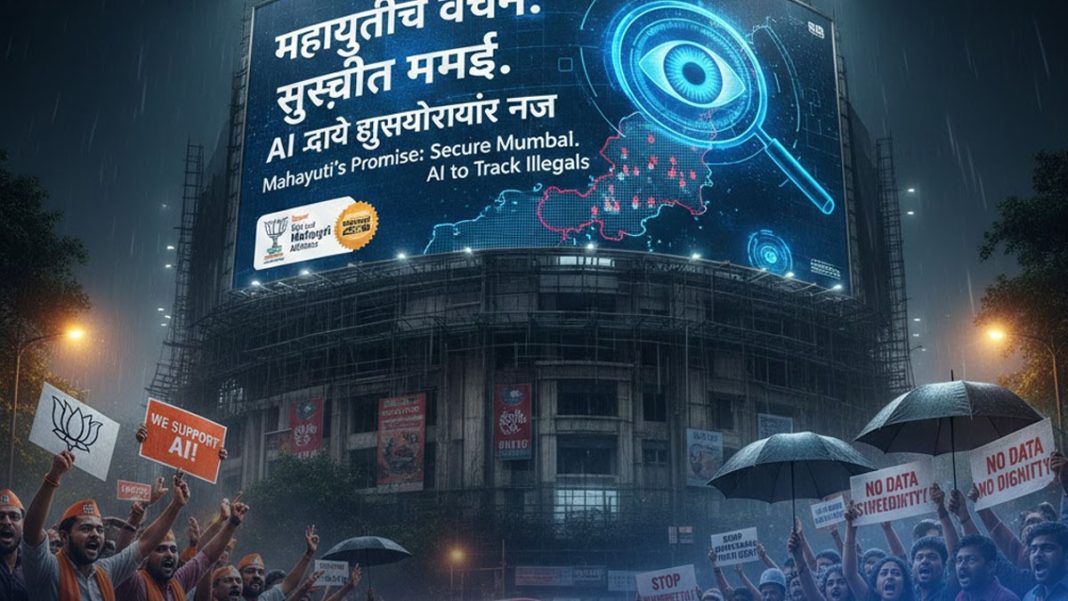
The BJP-led Mahayuti alliance just released their Mumbai civic manifesto, and all of a sudden, AI is in the news for security and governance. They’re promising to use the latest technology to find and keep an eye on illegal Bangladeshi and Rohingya migrants all over the city. The pro-BJP crowd is excited about the BMC elections, but everyone else is angry. A classic move that divides people in India’s most chaotic city.
Let’s take a closer look at the plan. They’re talking about AI-driven surveillance, hard-core data analysis, and easy communication between agencies like the police, the BMC, and maybe even the central intelligence agency. What is Mahayuti’s pitch? There are more than 20 million people living in Mumbai, and the borders to the north and east are leaking. This, along with dinosaur-era tracking systems, makes it impossible to find people who don’t have papers. There are security risks from possible radicals living in slums, and there are also problems with fake IDs that make it hard to get welfare, water, power, and housing. Mumbai is India’s financial engine, so it can’t have blind spots.
The BJP calls it “smart governance,” which sounds fancy. Imagine this: AI is taking in voter lists from cities, Aadhaar links (where they are legal), rental records, electricity bills, and even CCTV feeds and mobile tower data. Put everything together and mark anything that seems off, like a “local” with no deep roots or strange patterns. Get rid of those manual checks that take weeks and miss half the time. Instead, predictive alerts say, “Hey, check this Dharavi pocket for settlements that don’t seem right.” Fans say it would move cops from putting out fires to stopping them, freeing them up to deal with real crime while smart-planning hits potholes, sewers, and traffic.
I’ve seen similar technology in digital ads—Meta’s algorithms can find fake accounts or ad fraud in seconds. How about making it city-sized? It might work if done correctly. Supporters say that Singapore or Dubai’s AI cities are cleaner, safer, and have less drama.
But wait—civil rights activists and the opposition (Shiv Sena UBT, Congress) are going crazy. They scream, “Invasion of privacy!” Who’s in charge of deciding what’s “illegal”? Unclear criteria could single out Muslims, people from the Northeast, or any brown face in a slum. Think about AI mistakes: Mistakenly flags a real worker from UP, which leads to raids, harassment, and family trauma. We’ve seen Aadhaar problems ruin lives; now add facial recognition? A recipe for a disaster of discrimination. Plus, data breaches—are the hackers in Mumbai going to have a feast?
Opposition leaders keep saying that BMC elections are about potholes, not patriotism. Water shortages that kill summer, gutters that overflow and spread dengue, rents that are through the roof, and BEST buses that are falling apart—fix those first! They smell like vote-buying tricks: Make migrants afraid in wards where Hindus are the majority, and ignore issues that matter to them. That’s a good point. The 60% of people in Mumbai who live in slums need taps and toilets, not drones flying over them.
Lawyers also have something to say. Article 21 of the Constitution gives people the right to privacy. After Puttaswamy, the DPDP Act will come into effect. Any AI tracker needs strict rules. Are there bias audits? Judicial control? Appeals from citizens? If you don’t do those, it’s SC smackdown city, like the Aadhaar privacy fights. What about protests? Blockades like those in Dharavi are on the way. It’s dead on arrival without transparency reports.
Mahayuti says, “Tech isn’t evil; the people who use it are.” Smart regulation means limiting data, having human review loops, and not deporting people automatically. AI cuts down on police bias (no “he looks shady” vibes) and sticks to the facts. It’s modernization, like how UPI changed payments without hurting banks. Frame it as an anti-terror shield based on what happened after 26/11, protecting Mumbaikars’ jobs from cheap illegal workers who drive down wages.
This isn’t just a hunt for migrants; it’s a complete change in the city. Nail pop dynamics, and BMC sets budgets correctly—no more building fancy towers while slums go hungry. AI models traffic flows and slum encroachments to make better layouts for things like metro expansions and coastal roads. What services? Like smart grids in other places, predictive maintenance on pipes cuts leaks by 30%. AI can find patterns in theft in a city where 40% of the power is stolen. Business is also good—cleaner security attracts foreign direct investment and helps me target rich clients with my ads.
Definitely fireworks for the election. AI is no longer just talk; it’s a weaponized wedge. Mahayuti bets that fear-mongering will win votes from people who are proud of their state. The opposition uses the term “fascist surveillance state” to get minorities and poor people in cities to support them. There are ghosts of the CAA-NRC and Delhi’s AI cop cams in this debate. Mumbai’s testbed: if it works, the BJP copies it across the country; if it doesn’t, it’s just a campaign gimmick.
Take a step back to the India story. We’re an AI hub with ChatGPT competitors in Bengaluru, but our government isn’t keeping up. China scans Uyghurs’ faces (which is creepy); we need to find a balance between desi and non-desi people. Pros: Like the UK’s AI pilots, they cut crime by 20–30% and make it easier for people to move (there are an estimated 40 million illegal immigrants). Disadvantages: If biased data trains bad models, it could make divisions worse. How to fix? A board that watches over all parties, audits that are open-source, and a pilot in one ward.
For businesses like mine that run Meta and Google ads for D2C, stable Mumbai means reliable targeting. The flow of migrants messes up consumer data; AI clarity could help. But backlash could cause problems and stop ads.
Will this manifesto work or not as polls get closer? It all depends on turnout, the Uddhav factor, and Eknath Shinde’s splits. If you win, the AI pilots will roll; if you lose, the promise is put on hold. Either way, the AI-migrants-security trio is the most talked about topic at chai stalls from Bandra to Bhandup.
India is big Q: Is technology in government a way to make things run more smoothly or is it too much of an invasion? Mumbai might have an answer. Watching closely could change how we build cities and protect our borders without making them worse.