

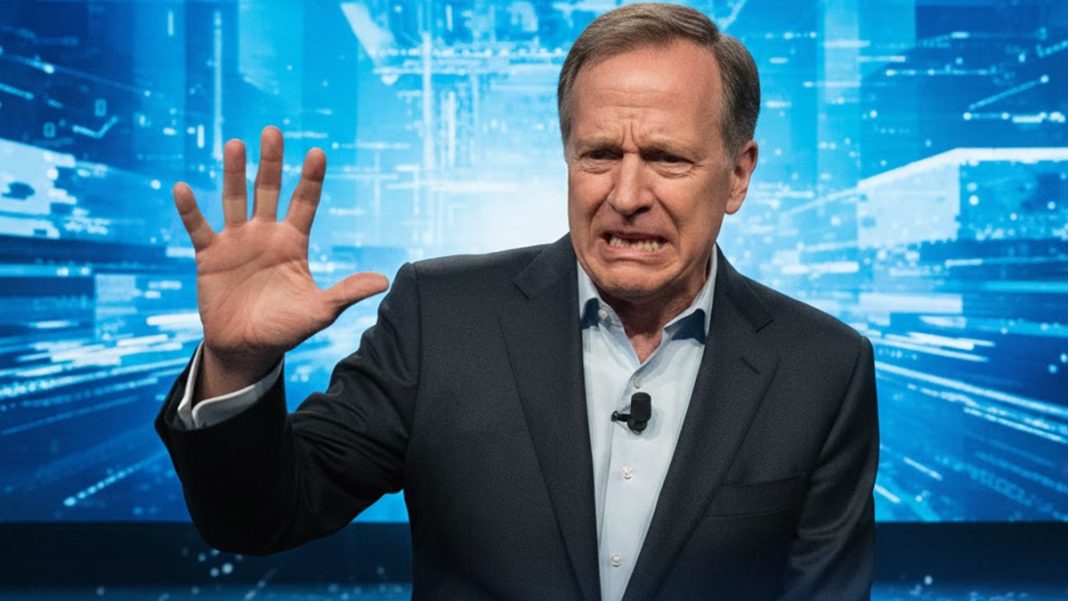
Marc Benioff just dropped a bombshell that’s got the tech world buzzing. The Salesforce CEO watched an AI documentary and his reaction was basically nuclear: he called it “the worst thing I’ve ever seen in my life.” Coming from someone who’s seen pretty much everything in tech over decades, that’s… a strong statement./
And honestly? It tells you a lot about how serious AI concerns are getting, even among the people building and profiting from the technology.
Why This Matters More Than Just One CEO’s Opinion
Benioff isn’t some random tech bro spouting off on Twitter. He runs Salesforce, one of the biggest enterprise software companies on the planet, and he’s been deeply involved in conversations about responsible technology and digital ethics for years. When someone at that level expresses shock that intense, it signals something important: AI concerns aren’t just academic anymore. They’re hitting the C-suite hard.
The documentary apparently focuses on AI’s potential harms when deployed without proper regulation, ethical oversight, or transparency. And look, we all know AI has impressive capabilities—productivity improvements, automation, better customer service, creative tools. But it’s also creating risks that are becoming impossible to ignore.
What Could Possibly Be That Shocking?
Without knowing exactly what the documentary showed, we can make educated guesses based on what AI critics keep highlighting. Misinformation spread at scale. Deepfake manipulation that’s indistinguishable from reality. Job displacement happening faster than societies can adapt. Privacy invasions on unprecedented levels. Biased algorithms making life-altering decisions about people. AI systems weaponized for cybercrime.
The scary part? AI adoption is happening at breakneck speed. Unlike previous technologies that took decades to integrate, modern AI tools deploy within months and reach millions instantly. When something goes wrong, the consequences spread just as fast.
The Misinformation Nightmare
One of the biggest concerns in AI documentaries is usually how AI influences public opinion. AI-generated text, images, video—all increasingly convincing, all potentially fake. This creates massive threats for politics, journalism, social media, basically any domain where truth matters.
When people can’t trust what they see online, democracy weakens. Social divisions deepen. Confusion becomes weaponized. And AI-generated misinformation spreads faster than corrections because platforms reward engagement over accuracy. It’s a genuinely terrifying feedback loop.
Bias Baked Into the System
AI systems learn from data, and that data reflects all our existing biases around race, gender, class, geography—everything humans screw up gets encoded into the algorithms. When businesses or governments deploy these systems for hiring, lending, policing, healthcare decisions? The biases get automated and scaled.
Vulnerable communities get harmed systematically by supposedly “objective” AI tools that are actually just amplifying historical discrimination at computational speed. That’s not theoretical—it’s already happening.
The Job Displacement Elephant in the Room
Companies are adopting AI primarily to cut costs and boost efficiency. Great for shareholders, potentially devastating for workers. Customer service, content creation, administrative work, even software development—all facing AI disruption.
The worry isn’t just that jobs disappear. It’s that companies might use AI mainly to replace workers rather than augment them, and do so without any real plan for reskilling or supporting displaced employees. If that happens at scale without social safety nets, we’re looking at serious economic and social instability.
Why Benioff’s Reaction Hits Different
Salesforce has built its brand partly around trust—handling customer data responsibly, building reliable enterprise tools. Benioff gets that if AI systems become unpredictable or get misused, business trust collapses. Companies face brand damage, lawsuits, regulatory penalties.
For him to react this strongly suggests the documentary showed AI harms that could genuinely threaten the business models and social license of tech companies. Not abstract future risks, but clear present dangers.
The Regulation Dilemma
Benioff’s statement adds fuel to the already-burning debate about AI regulation. Governments worldwide are scrambling to develop frameworks that prevent misuse while still enabling innovation. It’s an incredibly difficult balance.
Too much regulation and you stifle development, push innovation to less-regulated countries, lose economic competitiveness. Too little regulation and you get exactly the harms that apparently shocked Benioff enough to make him go public with such a strong reaction.
Finding that middle ground? Nobody’s figured it out yet, and the clock’s ticking.
What This Actually Tells Us
Benioff’s reaction reflects a broader reality: the AI revolution isn’t just about building smarter machines. It’s about whether we can control and direct them responsibly before they cause irreversible harm.
The documentary seems to have delivered a message powerful enough to genuinely shake one of tech’s biggest leaders. That should concern all of us, because if the people building and deploying AI are getting shocked by its potential consequences, what does that say about how prepared we are as a society?
The Uncomfortable Questions
What exactly did Benioff see that provoked such an extreme reaction? Was it AI-generated content used to manipulate elections? Deepfakes destroying lives? Automated systems making catastrophically biased decisions? AI tools enabling surveillance states? All of the above?
We probably won’t get specifics, but his public statement suggests whatever the documentary showed was compelling enough to cut through the usual tech optimism and hit someone who’s been in the industry forever right in the gut.
Where This Goes From Here
Whether you see AI as humanity’s greatest opportunity or its biggest threat (or both simultaneously), one thing’s clear: leaders like Benioff want the world taking AI responsibility seriously before consequences become unfixable.
The technology is advancing faster than our ability to understand and control it. We’re essentially running a massive, uncontrolled experiment on society, and some of the people with front-row seats are starting to get really nervous about how it’s unfolding.
Benioff’s reaction might be dramatic, but maybe that’s appropriate given the stakes. If we’re building something powerful enough to fundamentally reshape society—for better or worse—shouldn’t the discourse be intense? Shouldn’t leaders be reacting strongly when they see potential harms?
The alternative is what we usually get with new technology: everyone ignoring the downsides until they become crises, then acting shocked that nobody saw it coming even though people were sounding alarms for years.
At least this time, someone with real influence is paying attention and saying something publicly. Whether that translates into meaningful action or just becomes another news cycle remains to be seen.
But calling something “the worst thing I’ve ever seen” when you’re Marc Benioff who’s seen everything? That’s not hyperbole you can easily dismiss. Whatever that documentary contained, it clearly struck a nerve—and probably should strike nerves more broadly.
The question is whether we’ll actually do anything about it before those worst-case scenarios become reality.