


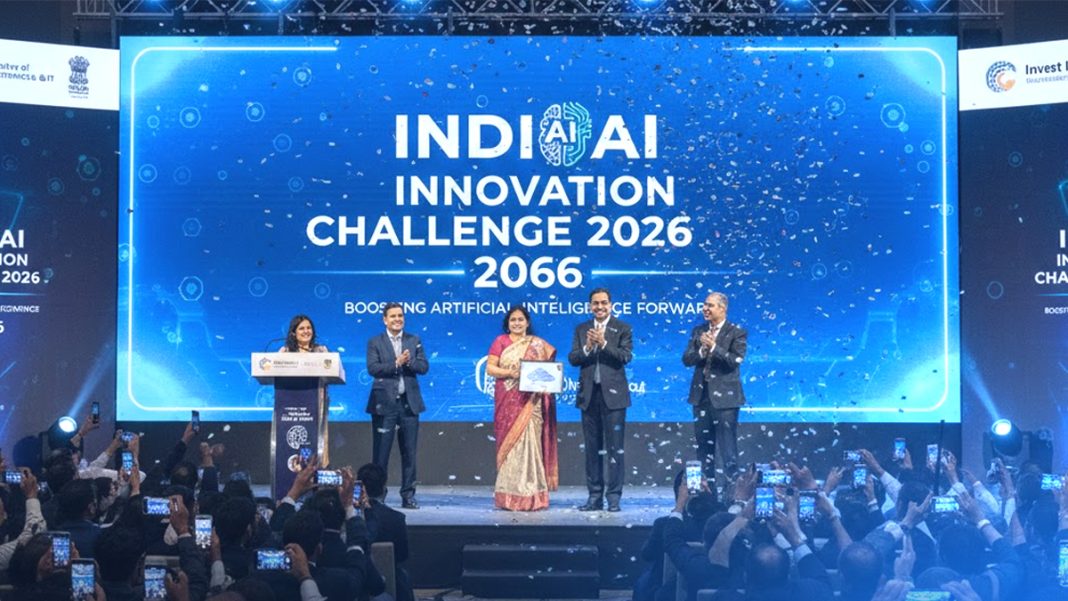
India is starting the IndiaAI Innovation Challenge 2026, which is a big deal if you’re interested in the country’s tech goals. The goal is to make India a real global AI leader by not just talking about it, but also building the infrastructure, talent, and solutions needed to make it happen.
We don’t know yet if it will work or if it will be another government program that doesn’t go anywhere. But there is definitely ambition.
What Is Really Going On Here
The IndiaAI Innovation Challenge 2026 wants to be a national place where developers, students, startups, researchers, and tech companies can work together to make real AI solutions. Not papers that sit in journals. Not models that stay in the lab. Real products that fix real problems in areas like healthcare, education, farming, transportation, government, cybersecurity, fintech, climate change, and more.
The idea is sound: find new ideas, give them money and help them grow into solutions that work in the real world. India has a lot of talented people and a lot of problems that AI could help solve. How to connect those two things in a useful way? That’s the problem.
Why India Needs This (And Why Generic Solutions Won’t Work)
People outside of India don’t always understand this: India’s complexity makes most ready-made solutions not work. There is a lot of variety in languages, geography, access to technology, and economic conditions. Problems that look the same on the surface need very different solutions depending on the situation.
AI made for developed markets with similar infrastructure often fails spectacularly when put in Indian conditions. You need solutions that take into account India’s unique challenges, such as unreliable internet access, a population that speaks many languages, different levels of literacy, and limited resources.
That’s why it makes sense to have a national innovation program that focuses on AI that works well in India. Generic tools won’t work. You need people who know how to solve problems that really happen in India, where things aren’t always neat and tidy.
What This Could Mean for New Businesses
Indian AI startups have a lot of problems to deal with, like not having enough money, having to pay a lot for computing power, and having trouble getting good datasets. If the IndiaAI Innovation Challenge really gives people access to cloud computing, datasets, mentorship, and connections in the industry, it could really make things fairer.
Developing AI costs a lot of money. Most startups can’t compete with big global companies that have almost unlimited resources without help. A well-planned challenge that gives Indian startups real access to infrastructure, not just prize money, could help them make products that are more competitive more quickly.
There is a big “if” when it comes to carrying it out. Government-backed projects often promise a lot of resources but deliver a lot less than they promised. We’ll see if this one is different.
The Student and Young Developer Point of View
Every year, India graduates a huge number of engineers and computer scientists. A lot of talent. But a lot of students don’t have places to show off their skills or find real job openings in the AI ecosystem.
A national AI challenge could help young developers get noticed, build their portfolios, and meet companies and investors. That could lead to jobs, funding for startups, and long-term careers in AI. India has a lot of talented people, but it needs better ways to get those people into jobs that will help them.
The question is whether this challenge will be one of those tools or just another contest that looks good on resumes but doesn’t really lead to anything.
Government and Public Services (Where AI Could Really Help)
AI in government and public services could really change things for the better in India. We’re talking about using big data to make better decisions, automating boring tasks that involve a lot of paperwork, finding fraud, and making services better for citizens.
AI could really help with smart city planning, keeping an eye on the environment, making transportation networks work better, and responding to disasters better. The IndiaAI Innovation Challenge could have a big effect if it focuses on public service apps and gets government departments to use the best ones.
In the past, the Indian government has been slow and inconsistent when it comes to adopting new technology. But there is real support for digital governance projects right now. Maybe this time will be different.
The Question of Responsible AI
As AI gets better, people are more worried about privacy, data abuse, biased algorithms, and false information. India has a chance to shape the development of AI in ways that put security, openness, and inclusion first, instead of putting ethics off until later.
It’s important to get teams to make AI that works well and is also responsible and fair. It’s a whole different story if the challenge really follows these rules or just talks about them in mission statements.
Will this really make a difference?
India really wants to be good at AI. To become a global AI powerhouse by 2026 or later, you need more than just big goals. It needs ongoing funding for infrastructure, education, research, and rules that allow for new ideas while keeping people safe. It also needs ways to turn ideas into real products that work on a large scale.
If done well, the IndiaAI Innovation Challenge 2026 could be a big part of that puzzle. It could give real resources, connect talented people with opportunities, and help promising solutions get to market. It could get attention, money, and partnerships from around the world.
Or it could turn into another contest that gets people talking, picks winners that look good in press releases, and then doesn’t have any lasting effects because there isn’t enough follow-through or ecosystem support.
The Realistic View
When national innovation challenges are part of bigger strategic plans and not just one-time events, they work. If the IndiaAI Innovation Challenge 2026 is linked to long-term government support, partnerships with businesses, funding sources, and real ways to get to market, it could be very important.
If it’s just a one-time competition with few resources, no real follow-up support, and winners left to figure out how to scale on their own, it will be another missed chance in a long list of good ideas that didn’t quite work out.
India has the skills, the issues that need to be fixed, and a growing interest in AI development. We don’t know all the details of how this challenge will work yet, so we can’t say for sure if it will lead to real progress.
For now, it’s worth keeping an eye on. If you’re a developer, student, or startup in India’s AI space, you should probably take part. At the very least, you’ll get some exposure and experience. In the best case, you get tools and contacts that really help you make something that matters.
The 2026 deadline gives people enough time to make real solutions instead of just hackathon demos. That will decide if this challenge becomes a turning point or just a footnote: whether India’s AI ecosystem uses that time well to make real progress or just makes noise without any real results.
I’m cautiously hopeful, but I’m not counting on success until I see how things actually turn out. India has a lot of potential. How do you turn that potential into results? That’s the hard part, and that’s where most ambitious projects fail.