

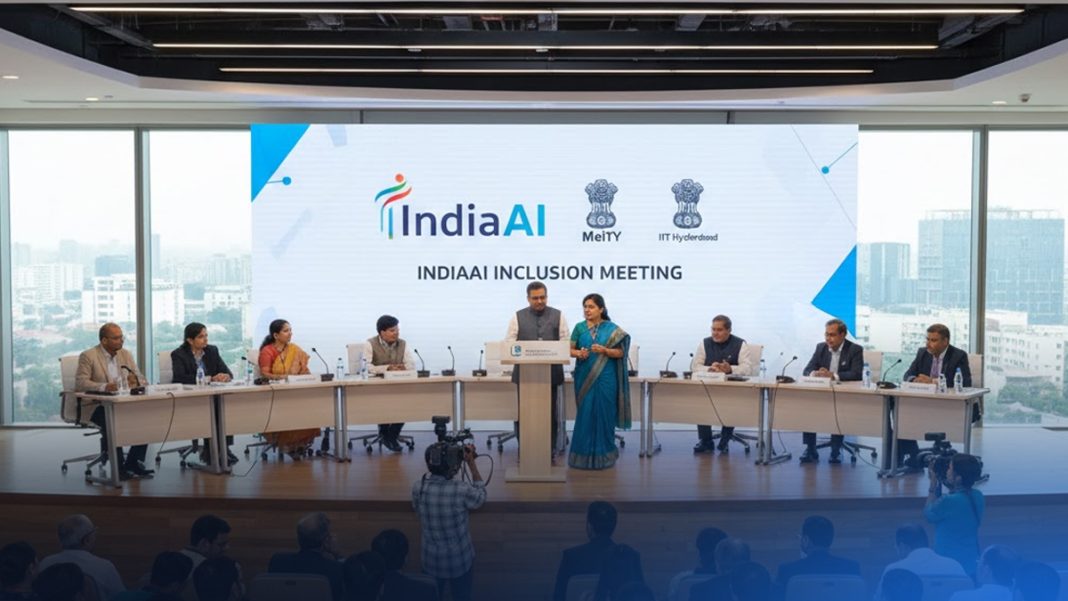
The Ministry of Electronics and IT (MeitY), IIT Hyderabad, and IndiaAI just held a meeting called the “Inclusion for Social Empowerment Working Group Meeting.” Yes, that’s a lot of government jargon, but what’s really going on here is more interesting than the official name makes it sound.
India is trying to figure out how to build AI that doesn’t just make tech companies richer, but also helps the hundreds of millions of people who don’t work for tech companies in Bangalore or Mumbai. That’s… kind of important, huh?
The Meaning of “Inclusion” Beyond a Buzzword Here
AI is becoming a huge part of everyday life, including healthcare, education, jobs, government, and public services. And here’s the hard truth: depending on how it’s made and who it’s made for, technology can either make inequality better or worse.
Most AI development around the world is aimed at people who speak English, know how to use technology, and have enough money to live comfortably. That makes money, but it leaves a lot of people behind. India can’t do that because not everyone in India is tech-savvy. There are a lot of different languages, cultures, levels of education, and economic situations.
The main question this working group is trying to answer is: how can we make AI that works for everyone, not just the people who are already better off because of technology?
The whole problem is how complicated India is.
India has more than 20 official languages and hundreds of dialects. A huge gap in wealth. Urban tech hubs next to rural villages with little access to electricity. Areas with a lot of people who can read next to areas where a lot of people can’t read at all. The differences are huge: different education systems, levels of access to healthcare, and quality of digital infrastructure.
A tool for AI that only works in English? Not useful for people in rural areas who speak regional languages. AI for healthcare that works in cities? Doesn’t help people in villages where there aren’t many medical facilities. AI in education assuming fast internet? Not possible for millions who rely on spotty mobile data.
You can’t just copy and paste AI solutions from the West and expect them to work. India needs AI that is made just for Indian life, with all its good, bad, and complicated parts.
What IIT Hyderabad and MeitY Are Really Up To
IIT Hyderabad has technical knowledge and the ability to do research. MeitY sets policy and coordinates the government. IndiaAI takes care of putting plans into action. In theory, this combination closes the gap between government goals, academic research, and what really happens on the ground.
What about in real life? We’ll find out. India has a mixed record when it comes to turning big plans into successful actions. But at least the right people are talking about it at the right levels.
Important Areas That Really Matter
The working group is figuring out where AI can have a direct effect on society instead of just vague future benefits:
Tools for teaching in areas that don’t get enough help. AI-powered learning that works in regional languages, adapts to different speeds of learning, and can be used on basic devices with poor internet access.
Technology that helps people with disabilities. Voice-based interfaces, visual aids, and other tools that make technology easier for people with different disabilities to use.
Translating and localizing languages. AI that can actually understand Indian languages other than Hindi and English. Support for regional languages is very important for real inclusion.
Access to government services. AI that helps people understand their rights, navigate systems, and get welfare programs can make bureaucracy less painful. Agricultural advisory services. Farmers can use useful AI tools to help them plan their crops, get weather forecasts, find out about market prices, and deal with pests.
Platforms for developing job skills. AI-powered training for skills that will help you get a job, tailored to your level of education and background.
These aren’t fancy apps for consumers. They’re not very glamorous, but they could change things if done well.
Accessibility is more than just being able to get online.
Real accessibility means that something is affordable (it works on cheap devices), easy to use (it’s easy for people who aren’t very tech-savvy), supports local languages, and is actually useful for people’s daily problems.
Voice-based AI is helpful for people who don’t like to type or who can’t read or write well. Lightweight apps that work on basic smartphones make it possible for people in rural areas to use flagship devices. Works offline in areas where connectivity isn’t always reliable. Easy-to-use interfaces that don’t require any technical knowledge.
This stuff is a lot more important than new features that no one can use.
The Problem of Bias and Fairness
When AI is used in public services or social programs, bias can be very harmful. When systems are trained on unbalanced data, they give biased results that hurt people who are already weak, which is exactly the kind of people social empowerment programs should help.
Fairness, openness, and responsibility are more than just good ideas. They’re important for AI that doesn’t make things worse by claiming to fix them.
There need to be rules for working groups like this to make sure AI tools are safe and fair. That’s where India’s problems with implementation usually show up: whether or not they’ll actually follow those rules.
Data privacy can’t be an afterthought.
A lot of AI solutions need to gather personal information, like health records, school records, and information about welfare programs. As AI grows in India, it’s important to make sure that people’s data is safe, that their consent is respected, and that systems aren’t abused.
AI for social empowerment doesn’t work without public trust, no matter how good the technology is. People won’t use tools they don’t trust with their data. To build trust, you need to protect real data, not just make promises.
What This Really Means
India’s view of AI has changed from seeing it as a tool for business and the economy to seeing it as a tool for national development. People are now asking “how can AI make society stronger and less unequal” instead of just “how can AI make businesses more productive.”
That is really important if you do it right. Most countries see AI as a business tool first and foremost, with social effects being an afterthought. India is trying to focus on social impact from the start, at least in words.
My Skeptical But Hopeful Take: I’ve seen enough Indian government programs to be skeptical but still have hope. Big plans, great meetings, and strong words are all great, but when it comes time to carry them out, things don’t go as planned, red tape slows things down, and the people who were supposed to benefit see little to no real change.
This could easily turn into another program that makes reports and presentations but doesn’t really help the people it’s supposed to help.
But—and this is important—these talks need to happen at the policy level with technical institutions involved, even if they aren’t enough. You can’t make AI that includes everyone unless you first know what that means and plan carefully. This meeting is part of the planning and understanding phase.
It depends on things outside of this working group, like funding, political will, coordination between government departments, accountability for results, and making changes based on feedback from real users instead of assumptions.
The Bottom Line
India is trying to make AI that helps everyone, not just tech-savvy people who live in cities. The Inclusion for Social Empowerment Working Group Meeting is one part of that effort. It brings together government policy, technical research, and strategic coordination to figure out how AI can really help marginalized communities.
The goals are correct: technology that is easy to use, support for regional languages, helpful tools, ethical AI, data protection, and real-world solutions to real problems. The organizations involved are trustworthy: IIT Hyderabad for research, MeitY for policy, and IndiaAI for coordination.
This could either have a real impact on society or just be another government program that looks good on paper but doesn’t work in real life. It all depends on how well it is carried out, how committed people are to it, and how willing they are to change things based on what actually works instead of what sounds good in meetings.
It’s good that these talks are happening at high levels of policy for now. India has hundreds of millions of people who could use AI that is carefully planned and built to include everyone. We don’t know if they’ll really get it, but at least someone is asking the right questions.
That’s not all, but it’s something.