

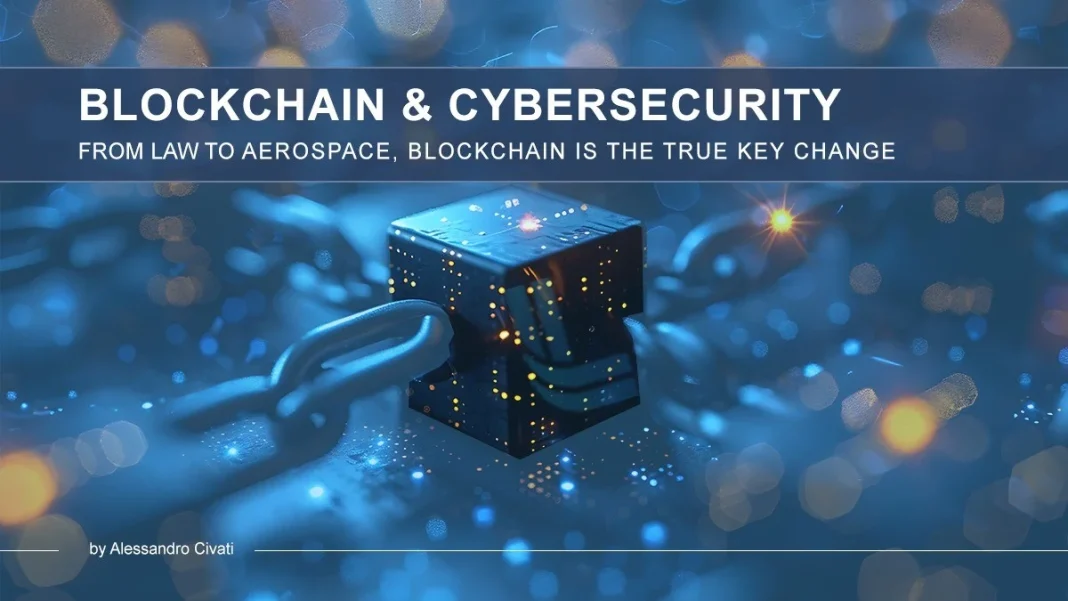
Cybersecurity serves as the unseen backbone of modern society. Every industry, from government to legal, healthcare, agriculture, manufacturing, aviation, and space exploration, relies on digital trust. However cyber threats aim directly at this trust: targeting identity, data integrity, origin, and responsibility. Although blockchain is often viewed as a Financial tool, its main strength goes Beyond finance. Its fundamental value is rooted in its security architecture,offering integrity, traceability,non-repudiation, and a verifiable record. When combined with sophisticated Cryptography, Identity verification, and strong Security measures, blockchain becomes a universal-trust-platform that helps reduce systemic risks.
WHY BLOCKCHAIN MATTERS FOR CYBERSECURITY (BEYOND THE HYPE)
Most breaches occur not because encryption is weak but because Systems Fail to reliably verify who did what, when, with which authority and whether records were Altered. Traditional DataBases are efficient but mutable and centrally controlled. Even with logs and backups, tampering remains possible, especially if attackers gain privileged access, or insiders manipulate records. Blockchain technology offers a different approach: Append-only records, Distributed verification, and Cryptographic linking of events.
Practically, it provides:
- Data integrity: detecting unauthorized record changes;
- Traceability: tracking the origin and chain-of-custody of assets and data;
- Non-repudiation: proving actions, signatures, approvals, and timestamps;
- Resilience: minimizing single points of failure and undetectable manipulation.
While not a substitute for Cybersecurity measures such as firewalls, Endpoint protection, IAM, Backups, and incident response, blockchain can significantly enhance the evidentiary and trust framework of digital operations.
LAW AND GOVERNMENT: EVIDENCE, IDENTITY, AND ACCOUNTABILITY
In legal and government settings the trustworthines of documents and procedures is crucial. Court evidence, contracts, procurement records, land registries, permits, and compliance audits all rely on reliable timelines. Blockchain can secure document fingerprints (hashes) in an unchangeable ledger, allowing future verification without revealing sensitive information publicly. A significant change is implementing verifiable identities. When combined with KYC-like identity checks, blockchain can enable secure electronic signing processes, verified professional registries -such as lawyers, notaries, auditors- and tamper-proof chains for legal paperwork. During cyber incident investigations, immutable event logs help accelerate attribution and minimize disputes over what actually occurred.
HEALTHCARE: PATIENT SAFETY, DATA INTEGRITY, AND SUPPLY CHAIN SECURITY
Healthcare remains a prime target for Ransomware attacks and Data-Tampering. More than just privacy concerns, the primary risk is clinical, disrupted lab results, altered prescriptions, or incomplete patient histories can lead to harm. Blockchain technology can establish a true record of essential clinical events, consent agreements, and audit logs, Without requiring all medical data to be stored on a blockchain. The most effective systems keep sensitive information off-chain, storing only proofs, access logs, and cryptographic signatures. Similarly pharmaceutical supply chains present another important application. Counterfeit drugs and cold chain breaches pose security-issues alongside business risks. Blockchain-enabled provenance tracking and IoT integration can ensure higH-confidence traceability from manufacturer to patient, helping to prevent fraud and facilitate quicker recalls.
AGRICULTURE: TRACEABILITY, FRAUD REDUCTION, AND CLIMATE SMART COMPLIANCE
Food systems are becoming more digital involving sensors, smart irrigation, logistics platforms and Export documentation. This shift introduces new CyberRisks, including tampered origin certificates, false sustainability claims and shipment manipulations. Blockchain technology enhances farm to fork traceability, allowing producers, cooperatives, distributors, and regulators to verify origin, batch history, and handling processes.
For exporters verifiable Provenance can reduce disputes and speed border processes. For consumers and retailers it builds trust in quality and sustainability labels. For governments and NoProfit entities, it can strengthen accountability for subsidy programs and climate-linked reporting, limiting fraud.
AEROSPACE AND CRITICAL INFRASTRUCTURE: INTEGRITY UNDER HIGH THREAT
Aerospace and defense sectors face constant threats as espionage, sabotage and supply chain issues. In this context, blockchain’s usefulness isn’t about public transparency – instead it’s about maintaining controlled, permissioned integrity across intricate networks of suppliers and subcontractors. A component’s entire lifecycle, from design-documents to manufacturing batches, certification processes, maintenance records, and decommissioning, can be linked into a secure, verifiable chain. When defects occur, investigators can quickly identify the root cause. Similarly any malicious modifications are detected early through integrity checks. In environments where trust must be shared across multiple organizations, a shared cryptographic record offers a strategic advantage.
THE REAL “KEY-CHANGE”: PROGRAMMABLE TRUST AND CYBER RESILIENCE
The key shift is philosophical: blockchain turns trust into something that can be verified and shared across parties. Instead of questioning, “Do we trust this database or administrator?”, organizations can ask, “Can we cryptographically confirm this event, signature, identity, and history?” This reduces dependence on blind faith and boosts resilience in multi-party settings, areas where cyber risks are greatest. Nevertheless, blockchain must be implemented carefully. Poor key management, weak governance, insecure endpoints and careless smart contracts can create new vulnerabilities. The Best approach is layered: strong IAM, secure key storage, rigorous DevSecOps, privacy by design and governance aligned with regulations and operational needs.
LUTINX: READY TO USE PLATFORM FROM 2021
LutinX is an off the shelf platform incorporating blockchain certification, identity verification, KYC, and legally verifiable record preservation. It enables organizations to establish Traceability, generate authenticity certificates and maintain tamper-proof AUDIT trails across diverse industries. The platform is designed to accelerate real world deployment by reducing integration time while boosting Trust, compliance, and cybersecurity resilience. At the time of this article, we are regularly used in more than 10 countries every day, with monthly worldwide access from around 180 countries. In 2025, we broke the 2 million-user mark, with users receiving or accessing our products (Blockchain Badges, IP records, Timestamps services, ID secure identities, and more!).
In the upcoming phase of digital transformation, the key advantage won’t be the amount of data collected; rather, it will be the ability to demonstrate its authenticity, integrity, and complete accountability. Properly implemented, Blockchain serves as the trust engine enabling this verification.
👉 Author: Alessandro Civati
👉 Intellectual property protected by LutinX. Check the IP registration and the Authorship Certificate here.