

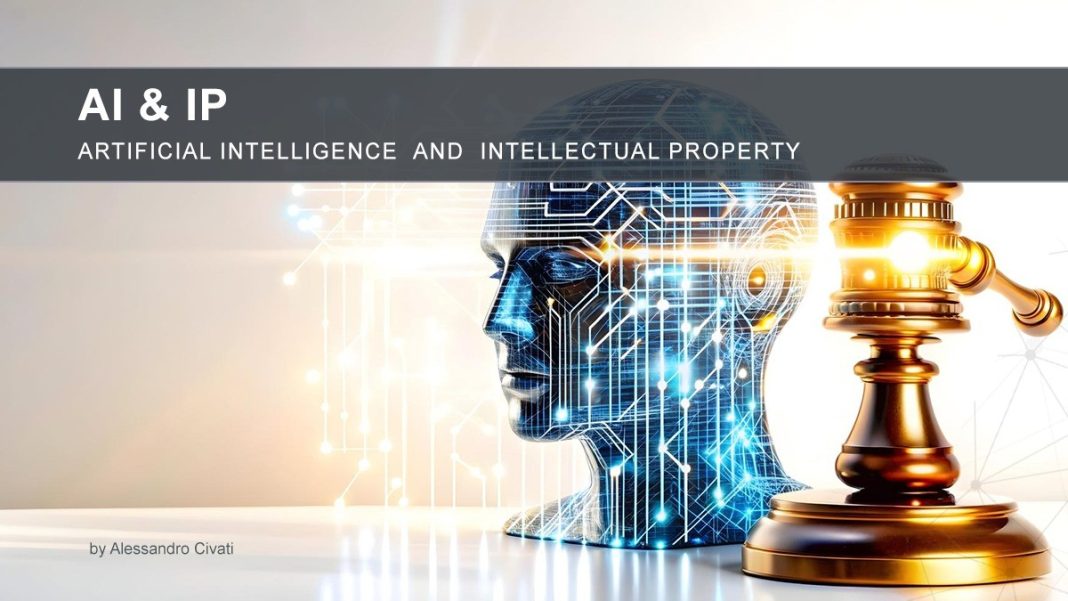
The convergence of Artificial Intelligence (AI) and Intellectual Property (IP) has quickly become a dynamic and complex area within law and technology. The main concerns center on two key points: the input (the data used to train AI models) and the output (the content generated by AI and its ownership, if any).
Increasingly, solutions are not just the data used to train AI models, but also the technical and commercial outputs. Emerging tools such as “safe” models, provenance systems, and governance platforms help prevent data leaks and form a new toolkit for managing AI–IP risks.
1. Training data and “Safe + Indemnification” models
The key legal cases related to AI and copyright highlight a major concern: large generative models are trained on vast datasets from the internet, such as texts, images, music, and code, often without clear permission from rights owners. The unresolved question remains whether using copyrighted works for training qualifies as fair use or constitutes widespread copyright infringement. While courts and regulators debate this, some leading vendors have adopted “safe and indemnification” strategies. These providers train models using carefully curated, licensed, or controlled datasets and also offer contractual indemnities to their clients, promising to defend them if a third party sues over the generated output.
A clear example is Adobe’s Firefly models. Firefly is trained on Adobe Stock assets, public domain works, and licensed content. For enterprise clients using Firefly-generated content within Creative Cloud and Experience Cloud, Adobe provides copyright indemnification: if a client faces legal challenges related to Firefly output, Adobe will defend them legally.
This approach clearly indicates to the market that AI concerns extend beyond model quality to include legal risk management and shared responsibility.
2. Who owns AI-generated output?
Most copyright authorities and courts are converging on a clear idea. If there isn’t a significant human creative contribution, content produced by AI alone is generally not eligible for copyright protection.
In practice, if a logo, marketing copy, illustration, or even software code is created almost entirely by an AI system, the company using it may not hold a strong, enforceable IP right over that work. A competitor could reproduce something very similar, and challenging them in court might be difficult or even impossible, because the work is seen as machine-made rather than human-authored.
As a result, businesses are rethinking how they use AI in their creative and technical workflows. Instead of treating AI as a fully autonomous creator, they are:
- ensuring that humans remain at the center of the creative process,
- documenting prompts, iterations, and edits,
- recording where and how human judgment shaped the final result.
This shift turns AI into a co-creation tool rather than a replacement for human authorship – and that distinction is increasingly crucial when it comes to claiming and defending IP rights.
3. Provenance: the role of LutinX.com
In an AI-powered workflow where content can be endlessly remixed, extended, and regenerated, it’s crucial to establish who did what, when, and on which version. Platforms like LutinX.com are built precisely for this purpose: users can register documents, creative works, code, datasets, and AI-generated outputs on blockchain; each registration includes a trusted timestamp, a cryptographic hash, and the registrant’s identity verified via KYC procedures. Through a public explorer, third parties can independently confirm the existence and timing of a registration. In the AI context, this means you can: register the original human idea (such as a brief, sketch, or initial code), record key AI-assisted versions and iterations, and secure the final product delivered to the market. If a dispute occurs later, LutinX’s combined use of blockchain and identity verification enables reconstruction of the entire creative process and enhances the evidentiary strength of your claim regarding a specific work or version.
4. Governance and preventing data leakage
A key concern is the risk of losing trade secrets and sensitive data through unmanaged AI use. When employees share roadmaps, proprietary code, pricing strategies, or confidential reports with public chatbots, this information could be recorded or used in training models. While vendors assure robust safeguards, the company still faces risks if it cannot regulate what is shared and by whom. AI governance and Data Loss Prevention (DLP) solutions address this problem. For example, tools like Microsoft Purview monitor organizational data and classify or label sensitive information such as trade secrets, personal data, or regulated data. They enforce policies to block or hide sensitive content before it reaches external AI services, set access rights for different groups, and log interactions for compliance and investigation.
These systems, integrated within collaboration suites, development tools, and AI gateways, serve as a security layer that enables organizations to implement AI at scale safely, preventing the accidental leakage of their most valuable assets.
5. Deepfakes, identity, and the right of publicity
Finally, generative AI has created a new frontier: deepfakes of faces and voices, along with automated replication of artistic styles and public personas. This impacts not only copyright but also image rights and the right of publicity, the commercial use of an individual’s identity without permission. The answers here are changing rapidly: new laws and guidelines on consent and synthetic media, technologies for watermarking and verifying content authenticity, and tools for media and platforms to identify or flag AI-generated content.
In summary, the AI era doesn’t eliminate Intellectual Property but compels it to evolve. The emerging balance between innovation and rights will rely more on innovative technology options, such as ‘safe & indemnified’ models, provenance solutions like LutinX.com, and platforms that prevent data leakage, rather than solely on legislation.
Author: Alessandro Civati.
👉 Intellectual property protected by LutinX.com. Check the IP registration and the Authorship Certificate here.