


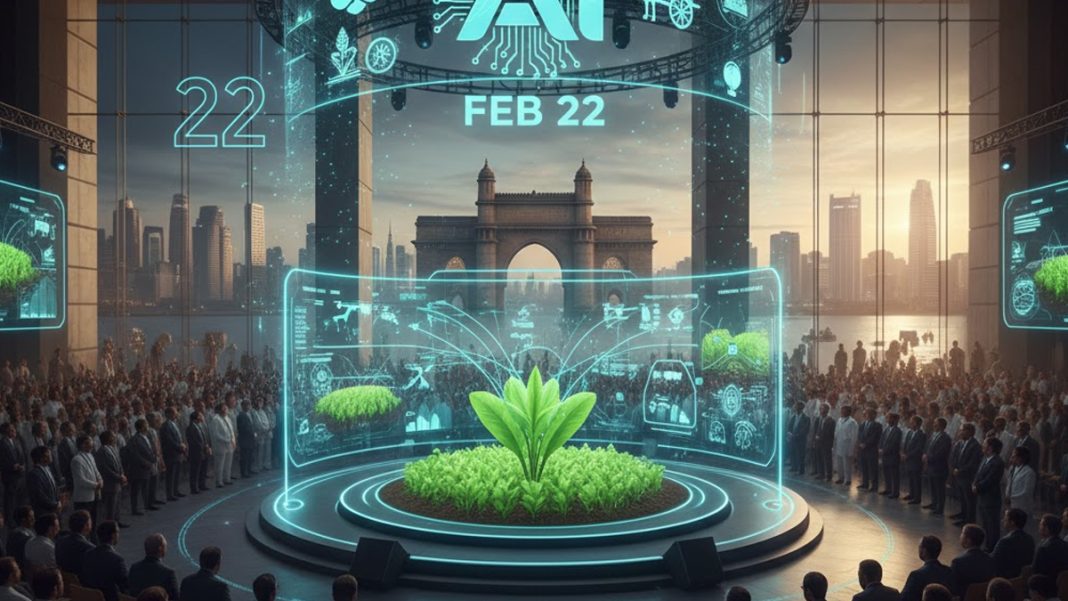
Maharashtra is making a significant push to transform Indian agriculture with artificial intelligence, launching the AI4Agri 2026 Global Conference on February 22-23 at the Jio World Convention Centre in Mumbai. The two-day event—backed by ₹500 crore in first-phase government funding—brings together over 1,500 leaders from international organizations, technology companies, research institutions, and the investment community to address one of the most pressing challenges facing the country’s 15 million farmers.
Chief Minister Devendra Fadnavis unveiled the conference branding while positioning Maharashtra as India’s agricultural technology leader. Agriculture Minister Dattatray Bharane framed the stakes plainly: farmers facing climate shocks, pest outbreaks, and market volatility need access to the same caliber of technology being deployed in enterprise boardrooms.
The Policy Foundation
The conference sits atop a substantial policy infrastructure that Maharashtra has been building under its Agriculture-AI Policy 2025-2029. The centerpiece is an institutional AI and Agritech Innovation Centre implementing several interconnected platforms.
MahaAgriX serves as the data backbone, centralizing soil composition data, weather patterns, and satellite imagery to feed farmer-specific advisories. The system recommends crop selection, optimal sowing timing, and fertilizer applications—a combination that has boosted yields by 22% in pilot deployments. AI-powered early warning systems predict pest outbreaks 10-14 days in advance, giving farmers time to respond rather than react. Geospatial mapping of microclimates helps with climate-resilient planning at the village level.
The traceability component is producing measurable export results. Linking two million smallholders to export markets through blockchain-verified provenance, the platform cut onion rejection rates by 35% and opened European Union markets to Maharashtra’s mango exports—markets that were previously inaccessible due to food safety verification requirements.
MahaVistar handles last-mile delivery of all this intelligence. The platform pushes vernacular voice advisories through WhatsApp and interactive voice response systems, reaching farmers with basic smartphones. Given India’s linguistic diversity and varying literacy levels, voice-first vernacular delivery isn’t a nice-to-have feature—it’s what determines whether the technology actually reaches the people it’s meant to serve.
Who’s Attending and Why It Matters
The attendee list reflects serious institutional weight. The World Economic Forum, FAO, UNDP, IFAD, World Bank, and Asian Development Bank are all represented, alongside research institutions including ICRISAT, IISc, and the M.S. Swaminathan Research Foundation.
Nandan Nilekani, who architected both Infosys and India’s Aadhaar digital identity system, brings a perspective that bridges technology infrastructure and population-scale deployment—exactly the combination Maharashtra needs. Dr. Soumya Swaminathan, formerly WHO Chief Scientist and now at MSSRF, adds global public health and agricultural research credibility.
The timing relative to the India AI Impact Summit in Delhi (February 16-20) is deliberate. With global AI leaders including Sam Altman, Demis Hassabis, and Dario Amodei already in India for the Delhi summit, Maharashtra is positioning Mumbai as the next stop—translating national AI ambition into state-level agricultural investment pitches.
The investor summit component is targeting $2 billion in commitments for Maharashtra’s agricultural sector, which contributes 14% of India’s total agricultural GDP—roughly $80 billion annually. A curated $500 million agritech fund is being structured, alongside financing platforms aimed at unlocking ₹10,000 crore in credit for farmer producer organizations.
The Startup Ecosystem
Maharashtra’s agricultural technology ambitions are backed by a maturing startup ecosystem with real deployment numbers. DeHaat’s vernacular advisory platforms serve 1.5 million farmers. Fasal’s IoT sensor networks optimize irrigation by 35% across enrolled farms. AgroStar’s AI credit scoring has approved financing for 200,000 farmers who lacked traditional credit histories.
These aren’t early-stage pilots—they’re companies with established deployments looking for Series A and B capital to scale. The 2025 vintage of agricultural technology investments totaling $1.2 billion is positioned for follow-on rounds, and the summit’s investor sessions are designed to facilitate those conversations.
Incubators at ICRISAT and MSSRF provide testing infrastructure for newer solutions. Maharashtra is offering five-year tax holidays to qualifying agritech companies, a policy signal that the investment environment is intended to be genuinely competitive.
Global Benchmarks and Local Realities
The ambition is informed by international precedents. Israel has achieved 90% precision agriculture adoption with yields reaching $2 million per hectare. Dutch vertical farming produces 30 times the output of traditional methods. These numbers represent what’s possible when agricultural technology reaches full maturity.
Maharashtra’s adaptation challenge is substantial. Indian smallholders average 1.5 hectares of land and ₹1.5 lakh in annual income. The technology stack appropriate for a Dutch greenhouse operation or an Israeli industrial farm needs fundamental redesign to work for someone farming a few acres with a basic smartphone in a village with intermittent connectivity.
The WhatsApp-first, voice-first, satellite-data approach reflects this constraint. When 87% monsoon prediction accuracy gets delivered via a voice message in Marathi to a farmer’s phone, that’s a different engineering challenge than building precision agriculture software for well-capitalized operations. Maharashtra’s platforms are attempting to bridge that gap at scale—which is precisely what makes them interesting to international development organizations looking for Global South models.
Monsoon prediction accuracy of 87% and drought vulnerability mapping covering 90% of districts represent the current baseline. The AI genomics work on climate-resilient varieties of grapes, pomegranates, and bananas—Maharashtra’s agricultural specialties—addresses longer-term adaptation to changing weather patterns.
Challenges That Need Honest Acknowledgment
The government’s own framing acknowledges significant obstacles. Farmer digital literacy lags at 45%, meaning more than half of the target population needs support before they can independently use the platforms being built for them. Rural connectivity remains inconsistent despite Jio’s extensive network buildout. Data privacy under India’s Digital Personal Data Protection Act requires governance frameworks that haven’t been fully tested at agricultural scale.
The proposed solutions—5,000 Common Service Centers providing human support, vernacular interfaces reducing literacy barriers, federated learning approaches to preserve data privacy—are reasonable responses, but each requires sustained execution over years rather than months. Building the platforms is the easier part. Changing how 15 million farmers interact with information and make decisions is the hard part.
The Economic Projection
Maharashtra’s AI-driven agricultural ambitions come with ambitious economic targets. A 25% productivity improvement across the sector would add ₹2 lakh crore to state GDP. The 40% income uplift projected for precision farming adopters would meaningfully change rural household economics if it materializes at scale.
Whether these projections prove accurate depends on execution quality, farmer adoption rates, and factors outside anyone’s control—including the climate variability the technology is being built to manage. But the directional case is sound: Maharashtra’s agricultural sector is large enough that even partial technology adoption at scale produces significant economic impact.
The AI4Agri summit is positioning Mumbai as the institutional home for that ambition—a place where global agricultural technology expertise meets one of the world’s largest and most complex farming populations. Whether it delivers on that positioning will become clearer over the five-year policy horizon the Maharashtra Agriculture-AI Policy has set for itself.